Discovering a sudden nip—or an unexpectedly hard bite—from your pet bird can be painful and confusing. You may even wonder if your feathered companion has suddenly turned against you.
The good news is that biting is rarely about being “mean.” Birds use their beaks for much more than eating. Their beaks help them climb, explore, play, preen, manipulate objects, communicate, and interact with the world around them.
When a bird bites, there is usually a reason behind the behavior.
Learning why birds bite can help you understand what your bird is trying to communicate, recognize warning signs before a bite occurs, and build a relationship based on trust rather than fear.
In this guide, we'll explore common reasons birds bite, how to recognize bird body language, and gentle, positive ways to reduce biting behavior
1. Fear and Self-Defense
Fear is one of the most common reasons a bird may bite.
Birds are prey animals, so their instincts are strongly influenced by the need to recognize and respond to potential danger. When a bird feels frightened, trapped, cornered, or unable to escape, biting may become a way to defend itself.
Common Fear Triggers in the Home
Sudden movements: Quickly reaching toward your bird or waving your hands near the cage can be frightening.
Unfamiliar objects: New household items, hats, clothing, or changes in appearance may make some birds uneasy.
New environments: Moving the cage, introducing unfamiliar people, or exposing your bird to loud noises can cause stress.
Forced interaction: Reaching toward a bird that is backing away or showing other signs of discomfort can make the bird feel trapped and more likely to bite.
If your bird lunges or nips when you approach, pause and think about what happened immediately beforehand.
Instead of asking, “How do I stop my bird from biting?”, try asking, “What is my bird trying to communicate?”
That change in perspective can make a tremendous difference.
2. Hormones and Seasonal Behavior
Hormonal changes can affect a bird’s behavior, particularly as daylight hours change throughout the year.
A bird that is normally affectionate may become more excitable, possessive, territorial, or reactive during periods of increased hormonal activity.
Signs of Hormonal Behavior May Include:
Tail fanning
Wing displays or drooping
Regurgitating food for a person or favorite object
Seeking out dark, enclosed spaces
Nesting behavior
Increased territoriality
Becoming unusually possessive of a person, object, or area
Hormonal behavior can be frustrating, but punishment will not solve it. Instead, focus on providing a predictable routine, appropriate enrichment, healthy sleep habits, and clear boundaries.
A consistent, uninterrupted sleep schedule and avoiding excessive exposure to extended daylight may help support healthy hormonal rhythms. If hormonal behavior becomes severe, persistent, or concerning, talk with an avian veterinarian for individualized advice.
3. Territoriality and Cage Aggression
Your bird’s cage is more than a place to sleep. It is your bird’s personal living space.
Some birds become protective of their cage, food bowls, favorite perches, or other resources. This can result in what bird owners often call cage aggression.
You may notice that your bird is perfectly comfortable interacting with you outside the cage but becomes defensive when you reach through the cage door.
Instead of forcing your hand into the cage, give your bird an opportunity to come out voluntarily when possible. Positive reinforcement can also help your bird learn that your presence near the cage does not automatically mean something unpleasant is about to happen.
Respecting your bird’s personal space isn’t “giving in” to bad behavior. It is helping your bird feel safe enough to trust you.
4. Adolescence and Changing Behavior
Young birds can go through significant behavioral changes as they mature.
As a bird becomes more independent, you may notice increased confidence, curiosity, territorial behavior, excitability, or resistance to handling. Some bird owners refer to periods of increased nipping and lunging as the “bluffing stage.”
However, it is more helpful to view these behaviors as part of your bird’s development rather than assuming your bird is deliberately “testing” you.
Your young bird is learning about its environment, developing preferences, and discovering how different behaviors affect what happens next.
If your young bird bites, avoid dramatic reactions. Instead, focus on teaching appropriate behaviors through patience and positive reinforcement.
5. Pain or an Underlying Medical Problem
Birds are remarkably good at hiding signs of illness.
In the wild, showing weakness can make a bird vulnerable to predators. As a result, a bird may continue behaving normally even when something is wrong.
A sudden, unexplained change in temperament deserves attention.
If your normally gentle bird suddenly becomes aggressive, refuses handling, bites when touched in a particular area, changes its eating habits, becomes unusually quiet, or shows other changes in behavior, contact an avian veterinarian.
Biting isn’t always a training problem. Sometimes it is your bird’s way of saying, “Something hurts. Please leave me alone.”
6. Overstimulation and Excitement
Not every bite is an act of aggression.
Birds can become overstimulated during play, training, cuddling, or other exciting interactions. A bird may become increasingly energetic and then suddenly nip when it has reached its limit.
Learning your individual bird’s threshold is important.
Watch for changes in posture, vocalization, eye pinning, feather position, or activity level. If your bird starts becoming overly excited, give it a chance to settle down before continuing the interaction.
Is It Biting or Just Beaking?
Birds naturally use their beaks to explore the world.
A bird may gently touch your fingers with its beak, investigate your jewelry, nibble your clothing, or use your hand for balance. This isn’t necessarily biting.
Learning the difference between gentle beaking, exploratory behavior, and an intentional bite can help you respond appropriately rather than discouraging normal communication and exploration.
7. Boredom, Frustration, and Lack of Enrichment
Birds are intelligent, active animals with natural behaviors that need appropriate outlets. In the wild, birds spend much of their day searching for food, climbing, chewing, exploring, and interacting with their surroundings. Companion birds may have fewer opportunities to do these things unless we intentionally provide them.
Boredom and frustration don't automatically cause biting, but a stimulating environment can help keep your bird mentally engaged and give them appropriate ways to express instinctive behaviors.
Shredding and Chewing
Many birds have a natural desire to chew, tear, and break apart materials. Providing appropriate shredding opportunities can give your bird a satisfying activity while helping direct that instinct away from things you don't want them to chew.

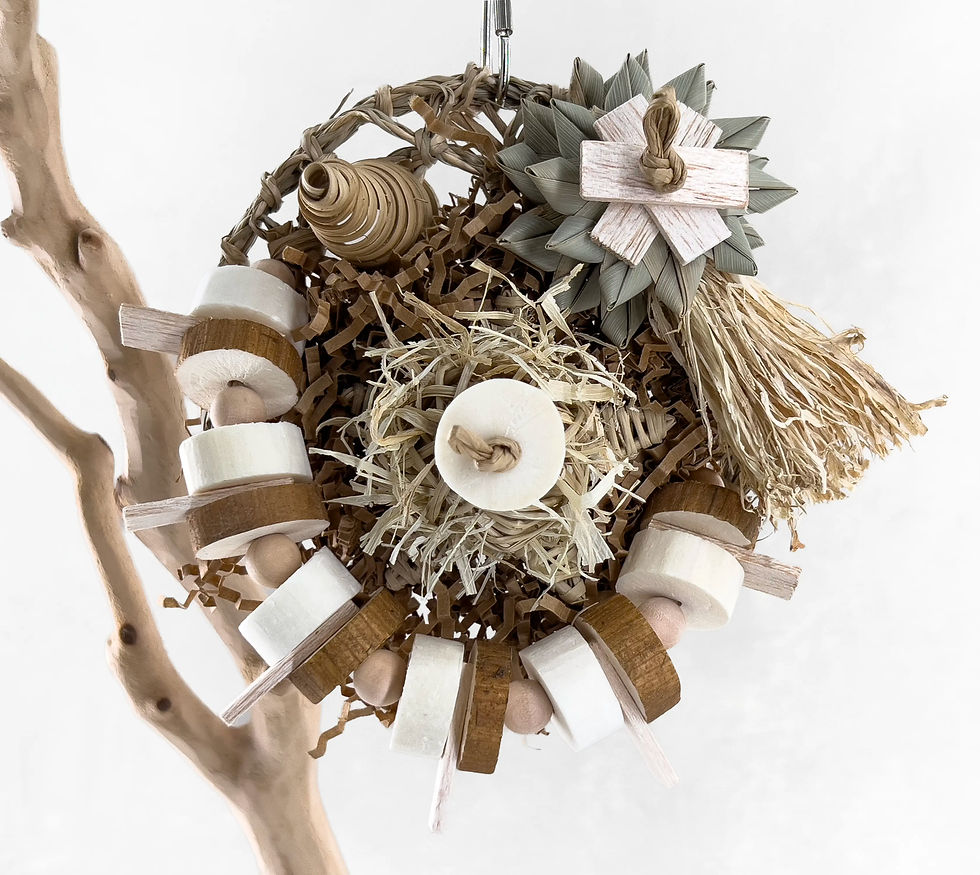
Tower of Balsa is handcrafted for birds that love to chew and destroy. Made with layers of soft balsa and sola wood, its lightweight materials are easy for small to medium-sized parrots to manipulate and shred.
Foraging
Foraging gives birds an opportunity to search, investigate, and work for food rather than simply eating from a bowl. Hiding treats among different textures or creating simple foraging challenges can turn mealtime into an engaging activity that encourages curiosity and problem-solving.

Plumes and Play is a natural seagrass bird activity mat that can be hung in the cage or used flat as a foraging surface. Treats can be tucked among the different textures to encourage your bird to explore and work for its reward.
Preening
Preening is an important part of a bird's daily routine. Birds naturally spend time maintaining their feathers, and some also enjoy interacting with soft, fibrous textures that encourage gentle picking, pulling, and preening.
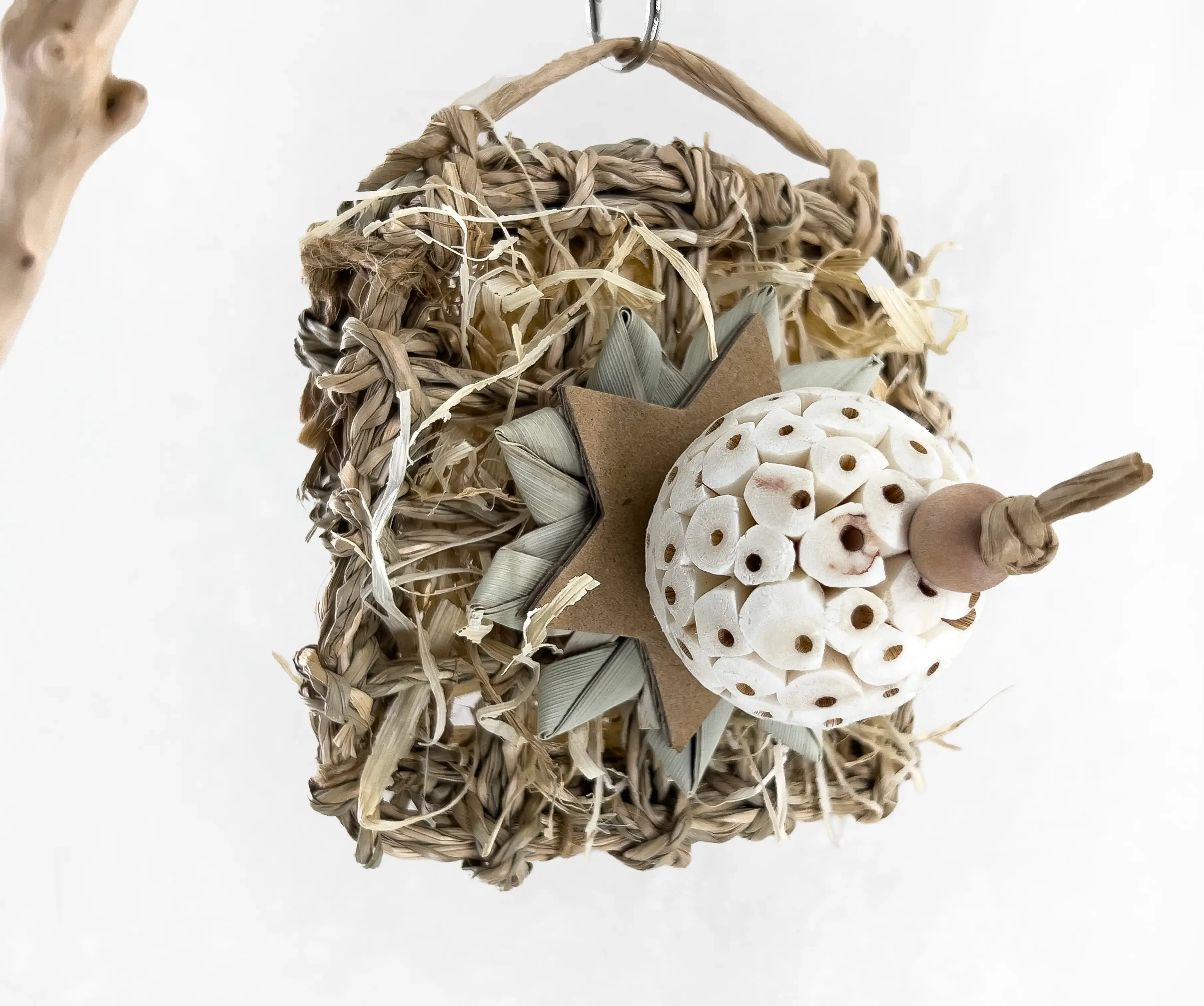
Shreddy Forager combines woven seagrass with natural textures that give smaller birds an opportunity to pick, pull, shred, and preen. Treats can also be tucked into the seagrass to add a simple foraging element.
Providing a variety of enrichment activities gives your bird opportunities to make choices and explore different textures throughout the day. While enrichment isn't a guaranteed solution for biting, it can be an important part of creating a satisfying and stimulating environment for your bird.
How to Read Bird Body Language Before a Bite
One of the best ways to prevent a bite is to learn your bird’s individual body language.
Birds often communicate discomfort before they bite, but their signals can be subtle. The same behavior can also mean different things depending on the situation and the individual bird.

How to Stop a Bird from Biting: Gentle, Positive Approaches
There is no single trick that will stop every bird from biting.
The most effective approach is to understand the reason behind the behavior and change what is happening before the bite occurs.
1. Never Punish Your Bird
Physical punishment, yelling, hitting the beak, shaking the cage, or intentionally frightening your bird can damage trust and increase fear.
Your goal isn’t to make your bird afraid to bite.
Your goal is to help your bird feel safe enough that biting becomes unnecessary.
2. Stay Calm After a Bite
A dramatic reaction can sometimes make biting more likely.
If your bird gives you a minor nip, try to remain calm. Avoid screaming, jerking your hand around dramatically, or turning the interaction into a game.
Calmly disengage and give your bird a chance to settle.
If the bite was preceded by clear warning signals, consider what your bird was communicating and how you can respond differently next time.
3. Use Positive Reinforcement
Reward the behaviors you want to see.
Target training, step-up training, and other positive reinforcement techniques can help your bird learn that calm cooperation leads to rewarding experiences.
You can use small, high-value treats that your bird enjoys, such as millet or appropriately sized pieces of favorite foods.
The goal is to teach your bird: “When I cooperate, good things happen.”
4. Respect Your Bird’s Boundaries
If your bird is leaning away, hissing, lunging, or displaying other defensive body language, listen to the message.
Give your bird some space and try again later.
Repeatedly forcing interaction can teach a bird that its subtle warnings aren’t effective, making a stronger warning—such as a bite—more likely.
Respecting boundaries isn’t spoiling your bird.
It’s communication.
When Should You Talk to an Avian Veterinarian?
A behavior change shouldn’t automatically be assumed to be a training issue.
Contact an avian veterinarian if your bird’s biting is:
Sudden or completely out of character
Increasing rapidly
Associated with changes in appetite or drinking
Accompanied by unusual droppings
Occurring when a particular area of the body is touched
Accompanied by lethargy or other unusual behavior
Happening along with signs of injury or illness
Because birds can hide illness, unexplained behavioral changes deserve attention.
Understanding the Bite Instead of Fighting the Bite
When your bird bites, it can be tempting to focus entirely on stopping the behavior.
But the bite itself is only the final part of the story.
Was your bird frightened? Overstimulated? Protecting its space? Experiencing hormonal changes? Bored? In pain? Or simply trying to communicate that it had reached its limit?
When you learn to recognize the signals that come before the bite, you can begin responding to the cause instead of simply reacting to the behavior.
With patience, consistency, positive reinforcement, appropriate enrichment, and respect for your bird’s boundaries, you can build a relationship based on communication and trust.
Your bird doesn’t need to be forced into being comfortable.
It needs to learn that you are someone it can trust.
Create a More Enriching Life with The Joyful Beak
At The Joyful Beak, we believe enrichment should encourage the natural behaviors that make birds who they are.
Our handmade natural bird toys are thoughtfully designed for small to medium companion birds who love to forage, shred, chew, and preen. We create our bird toys without plastics, glues, paints, synthetic dyes, nylon, or cotton rope, giving bird parents a natural way to add meaningful enrichment to their bird’s environment.
Whether your bird loves searching for hidden treasures, tearing into satisfying shredding materials, or enjoying textures that encourage natural preening behaviors, providing the right enrichment can give them more opportunities to stay busy, curious, and engaged.
Because a happy, enriched bird isn’t just a bird with something to do.
It’s a bird with opportunities to be a bird.
Note: This article is for general educational purposes and is not a substitute for veterinary care. If your bird shows sudden or concerning behavioral changes, consult an avian veterinarian.